Wedding bouquets for Eastham Village couples and venues guide
Posted on 09/10/2026
Planning a wedding in Eastham Village can feel beautifully simple one minute and surprisingly detailed the next. The dress, the venue, the timing, the guest list... and then the bouquets. Wedding flowers are not just a finishing touch; they shape the feel of the day, frame the photographs, and help tie the whole ceremony together. This Wedding bouquets for Eastham Village couples and venues guide is here to make that part easier, with practical advice for choosing blooms that suit your style, your venue, and the flow of a real wedding day.
Whether you are going for soft and classic, relaxed and seasonal, or something a bit more luxurious, the right bouquet should feel natural in your hands and work with the setting around you. And yes, it should still look good after a few emotional hugs and a bit of bustle before the vows. Let's get into the useful stuff.
Why wedding bouquets for Eastham Village couples and venues guide matters
A wedding bouquet is one of those small details that quietly does a lot of heavy lifting. It appears in nearly every photo, sits at the centre of the bride's look, and often sets the tone for the rest of the flowers on the day. For couples marrying in Eastham Village, that matters even more because local venues can vary a lot in style and scale. A bouquet that feels perfect in a cosy room may look too slight in a larger ceremony space. A dramatic arrangement that looks stunning in a grand hall can feel overwhelming in a more intimate setting.
That is why a venue-aware bouquet plan is so useful. It saves you from choosing flowers in isolation. Instead, you are thinking about the overall picture: the architecture, the light, the season, the size of the bridal party, and how much movement the day will have. That is the sort of practical thinking that keeps the flowers looking intentional rather than just "nice".
There is also the emotional side. Couples often choose blooms because they carry meaning: a favourite flower, a family connection, or a colour that feels like "them". In our experience, the best bouquets balance emotion with practicality. The flowers should look personal, but they also need to survive a morning of getting ready, a ceremony, a few hundred photos, and the odd warm hand clasp. No bouquet enjoys being passed around like a rugby ball, truth be told.
For Eastham Village couples, another reason this guide matters is logistics. Wedding days move quickly. Bouquets need to arrive on time, be easy to hold, and suit the timings of the ceremony and venue access. If you are also arranging bridesmaid bouquets, buttonholes, corsages, or table flowers, everything has to work together. The flower choices become part of the rhythm of the day, not just decoration.
Practical takeaway: the best wedding bouquet is not just beautiful on its own; it fits the venue, the season, the schedule, and the couple's style without demanding constant attention.
How wedding bouquets for Eastham Village couples and venues guide works
The easiest way to think about wedding bouquet planning is this: start with the venue, then the outfit, then the season, and finally the details. People often do it the other way around because a single flower image catches the eye. That happens. We all fall for a pretty peony moment. But the bouquet has to work in real life, not just in a saved Pinterest folder.
A good wedding bouquet process usually follows a few connected steps:
- Choose the overall style. Classic, modern, romantic, rustic, minimal, or luxury.
- Look at the venue. Think about colours, room size, lighting, and the look of the ceremony backdrop.
- Match the dress and accessories. The bouquet should complement, not compete with, the outfit.
- Consider the season. Seasonal flowers are usually fresher-looking, easier to source, and often more natural in appearance.
- Decide on bouquet shape. Hand-tied, compact posy, cascading, or looser garden-style.
- Build the supporting flowers. Bridesmaids, buttonholes, ceremony flowers, and table pieces should feel like one family.
For couples in Eastham Village, venues often shape this process more than they expect. A bright, airy space can take softer pastels or mixed-colour bouquets beautifully, while a more traditional venue may suit whites, creams, blush tones, or deeper romantic reds. If the venue has patterned interiors, bold wallpaper, or dramatic draping, a simpler bouquet can be the smarter choice. If the room is calm and neutral, your flowers can carry a little more of the visual drama.
It also helps to think about the bouquet as a photographed object. It is viewed from above, from the front, in motion, and sometimes half-hidden under a veil or coat. So the bouquet needs shape from multiple angles. That is one of those tiny details that people only notice when it has gone wrong.
Key benefits and practical advantages
The right bouquet brings more than colour. It can make the day feel more coherent, more polished, and frankly less stressful. That may sound small, but wedding planning is often a stack of small things. Get enough of them right and the whole day flows.
- Better visual harmony: A bouquet that matches the venue and dress helps the whole wedding feel designed rather than assembled.
- Stronger photos: Good bouquet shape and colour improve close-ups, ceremony shots, and candid moments.
- Less last-minute stress: If the flowers are planned properly, there is less panic on the day about what arrives, when, and how it will look.
- More comfortable to carry: A bouquet sized for the person holding it is easier to manage during the ceremony and photos.
- Better budget control: Planning the bouquet around seasonality and priorities helps direct spend where it matters most.
- Clearer styling across the wedding: Once the bouquet is set, other flowers can follow the same palette and mood.
There is also a practical benefit that gets overlooked: bouquet choice influences everything else. Pick a rich, romantic bouquet and you may lean toward softer bridesmaid flowers. Choose something sleek and modern, and the buttonholes and table arrangements will likely follow suit. In other words, the bouquet becomes a design anchor. That is useful, especially when multiple decisions are floating around at once.
If you are planning wedding flowers alongside other gifting or special-occasion flowers, it can also help to look at a florist's wider style and quality. For example, browsing a range such as wedding flowers or the broader all flowers collection can give you a sense of colour language, finishing, and presentation before you commit.
Who this is for and when it makes sense
This guide is for Eastham Village couples who want their flowers to feel considered without turning wedding planning into a full-time project. If that sounds familiar, you are in the right place. It is especially useful if you are:
- planning a local ceremony or reception and want the bouquet to suit the venue naturally
- choosing flowers for a modest guest list and want each floral detail to count
- working with a mixed style, such as a traditional dress in a modern venue
- trying to balance sentimental flower choices with a realistic budget
- managing multiple floral elements, including bridesmaids, buttonholes, and table arrangements
- booking closer to the date and need a clear, efficient decision process
It also makes sense for couples who are not sure what "their style" actually is yet. That is completely normal. Not everyone walks into wedding planning with a floral mood board and a confident answer. Sometimes the venue comes first, sometimes the dress, sometimes the season, and sometimes the bride just knows she wants something elegant and not too fussy. Fair enough.
This guide is also helpful if you are supporting the planning for a wedding at an Eastham Village venue. Parents, partners, sisters, and wedding party members often get drawn into bouquet decisions, especially when the bride wants a second opinion but not twenty of them. We have all seen that little pause at the table where three people say "yes, lovely" in three slightly different tones. That is where practical guidance earns its keep.
Step-by-step guidance
If you want a bouquet that works from the first look to the last photo, follow a simple planning flow. Nothing fancy. Just a sensible sequence.
1. Start with the venue and timing
Ask what the room looks like in natural light, how large the ceremony area is, and whether there are any strong colours or standout features. A bouquet should complement these things, not fight them. If the wedding is late afternoon, richer colours often photograph beautifully. Morning weddings tend to suit fresher, lighter palettes.
2. Define the mood in plain language
Forget floral jargon for a moment. Are you after romantic, crisp, soft, dramatic, modern, or countryside-inspired? That one word helps a florist narrow the options fast. "Elegant" is not enough on its own. Elegant can mean white roses, pale lisianthus, long-stemmed orchids, or a simple hand-tied bouquet with clean lines. The more specific you are, the better.
3. Choose flowers that suit the season
Seasonal flowers usually look more natural and can be easier to source. That does not mean you cannot have a favourite flower, but it is wise to be flexible. A spring bouquet and a late summer bouquet rarely look the same, and that is part of the charm. Seasonal planning also gives your bouquet a more grounded, lived-in feel rather than that slightly overworked look some imported arrangements can have.
4. Match size to height and outfit
A petite bride can be overwhelmed by a bouquet that is too large. A tall bride in a full-skirted dress may need a stronger bouquet shape to balance the silhouette. This is not about rules as such; it is about proportion. During fittings, hold a similar-sized arrangement or even a rolled towel if needed. It sounds daft, but it helps.
5. Decide the bouquet family
Think about the supporting flowers at the same time:
- bridesmaid bouquets
- buttonholes
- corsages
- top-table arrangements
- ceremony flowers
Keeping these in the same palette makes the wedding feel coherent. For example, a bouquet in white, blush, and soft green can be mirrored through bridesmaid bouquets and buttonholes without being identical.
6. Confirm delivery, handling, and timing
Wedding flowers need clear delivery timing. You do not want to be wondering where the bouquet is while someone is doing curls with half an hour to go. Check where the flowers should be delivered, who will receive them, and whether they need to be placed in water, boxed, or handed over directly. Timing matters more than people think.
7. Review the final details
Before the big day, confirm the final palette, names, quantities, and any backup instructions. If a flower is unavailable, decide in advance what the substitution should feel like: softer, brighter, fuller, or more structured. That makes any last-minute change easier to handle.
Expert tips for better results
These are the small things that tend to separate a pleasant bouquet from one that really lands.
- Think in texture, not just colour. A bouquet with roses alone can look very different from one that mixes roses, lisianthus, orchids, and softer filler. Texture gives depth.
- Use one standout element, not five. If everything is trying to be the star, the bouquet loses shape. Choose one focal flower or one strong design feature.
- Keep the handle comfortable. A bouquet can look gorgeous and still be awkward to hold. That is not ideal when you are already trying to walk, smile, and not trip.
- Choose colours that work in shade and daylight. British weather is famously flexible, shall we say. A bouquet should still look good if the sky changes its mind.
- Ask for a sample image or style reference. Clear visual references reduce misunderstandings. One person's "classic" is another person's "very bridal, but not too bridal".
- Let the venue guide the scale. If the room is ornate, a tighter bouquet can feel refined. If the room is minimal, you can go more generous and expressive.
One practical observation from wedding planning: the bouquet often looks best when it is not overcomplicated. It is tempting to keep adding things. A bit more pearl. One more bloom. Another ribbon. But restraint usually wins. A bouquet that has room to breathe photographs beautifully.
If you are browsing styles, collections like bridal bouquets, bridesmaid bouquets, and buttonholes can help you see how the individual pieces might work together.
Common mistakes to avoid
Wedding bouquets do not need to be stressful, but a few avoidable mistakes can cause headaches. Here are the big ones.
- Choosing before seeing the venue: A bouquet that looks perfect in isolation may feel wrong once placed in the actual room.
- Ignoring the dress shape: A bouquet that clashes with the silhouette can throw off the whole look.
- Overloading the design: Too many colours, textures, and ribbon choices can make the bouquet feel busy.
- Leaving colour decisions too late: Last-minute changes can make it harder to coordinate bridesmaids and table flowers.
- Forgetting the weather: Some flowers are more delicate in warm rooms or during long outdoor waits.
- Not asking about substitutions: If a stem is unavailable, you want to know how the final bouquet will be adjusted.
Another common issue is trying to make every bouquet do the same job. A bridal bouquet, bridesmaid bouquet, and table arrangement should be related, yes, but not identical. That is where weddings can start to feel flat. Variation within a shared palette is usually stronger.
And one more, because it really matters: do not underestimate delivery windows. Local wedding timing is often tight. If there is a ceremony at noon and a photo session after that, the flowers need to land smoothly in the schedule. It sounds obvious until the day is actually moving. Then it is less obvious.
Tools, resources and recommendations
You do not need a huge toolkit to plan wedding flowers well, but a few resources help a lot.
- Venue photos: Ask for recent images or take your own walkthrough shots so you can judge colour and scale properly.
- Dress swatches or photos: These make it easier to match tones instead of guessing from memory.
- Seasonal flower ideas: A simple mood board can help you stay open to what is naturally available.
- Guest list and wedding schedule: Useful when deciding how many bouquets, buttonholes, or table pieces you actually need.
- Product collections: Exploring a florist's wedding-specific ranges can help you compare styles, from classic to contemporary.
For couples who want a more coordinated set, collections such as a wedding collection, a matching bridal bouquet, or a coordinated bridesmaid bouquet can be helpful starting points. If you are leaning toward a softer, romantic look, something like a pure romance bridal bouquet or a white bridal bouquet may fit the brief neatly.
If your day needs a more dramatic or contemporary feel, it is worth exploring bolder designs too. A good florist should be able to help you compare what feels timeless versus what feels trend-led. Neither is wrong. It just depends on the mood you want when the room goes quiet and everyone turns to look at you.
Law, compliance, standards, or best practice
Wedding flowers are not usually a heavily regulated area in the way some industries are, but there are still sensible best practices to follow. If you are planning flowers for a venue in Eastham Village or wider East Ham, the practical focus is usually on safety, access, and clear communication rather than formal paperwork.
Good practice includes:
- Clear delivery instructions: Make sure the florist knows the venue contact, access point, and timing.
- Fire safety awareness: If flowers are being placed near candles, marquees, or decorative lighting, check the venue's rules first.
- Allergy consideration: If a close family member is sensitive to scent or pollen, ask about lower-scent options.
- Handling and storage: Flowers should be kept appropriately before handover so they remain fresh and presentable.
- Agreement on substitutions: Because seasonal availability can change, it is sensible to confirm what happens if a stem is unavailable.
It is also wise to check terms around payment, delivery, and refunds before the booking is finalised. Different florists handle these points differently, and it is better to ask early than to assume. In the UK, that kind of clarity is simply good practice. It keeps everyone calm and stops small misunderstandings from becoming annoying ones.
If you want to understand broader service expectations, it can help to review pages such as delivery information, guarantees, returns and refund guidance, and the florist's terms and conditions. That gives you a clearer picture of how wedding orders are handled from start to finish.
Options, methods, or comparison table
Not every wedding bouquet style suits every venue or couple. Sometimes seeing the options side by side makes the choice much easier.
| Style | Best for | Strengths | Watch out for |
|---|---|---|---|
| Classic hand-tied bouquet | Traditional weddings, flexible venues | Easy to carry, elegant, versatile | Can feel plain if the colour palette is too safe |
| Compact posy | Smaller frames, intimate ceremonies | Neat, manageable, polished | May not suit large dresses or dramatic rooms |
| Loose garden-style bouquet | Romantic, relaxed, seasonal weddings | Natural, textural, soft in photos | Needs good shaping or it can look untidy |
| Cascading bouquet | Formal settings, statement looks | Striking, dramatic, memorable | Heavier and more demanding to carry |
| Minimal modern bouquet | Contemporary venues, clean interiors | Stylish, uncluttered, refined | Needs excellent flower quality because there is nowhere to hide |
For many Eastham Village couples, a hand-tied or garden-style bouquet is the sweet spot. It feels relaxed enough for a warm, personal wedding but still looks polished in photographs. That said, the right answer is always the one that suits the couple and the room. Not the trend. Not the loudest suggestion from a well-meaning relative. The actual wedding.
Case study or real-world example
Imagine a couple planning a late spring wedding at a local venue with soft neutral walls, a modest aisle, and a bright reception room for lunch afterwards. They want the flowers to feel romantic but not overly formal. The bride likes white roses, but also wants a little colour so the bouquet does not disappear against a pale dress.
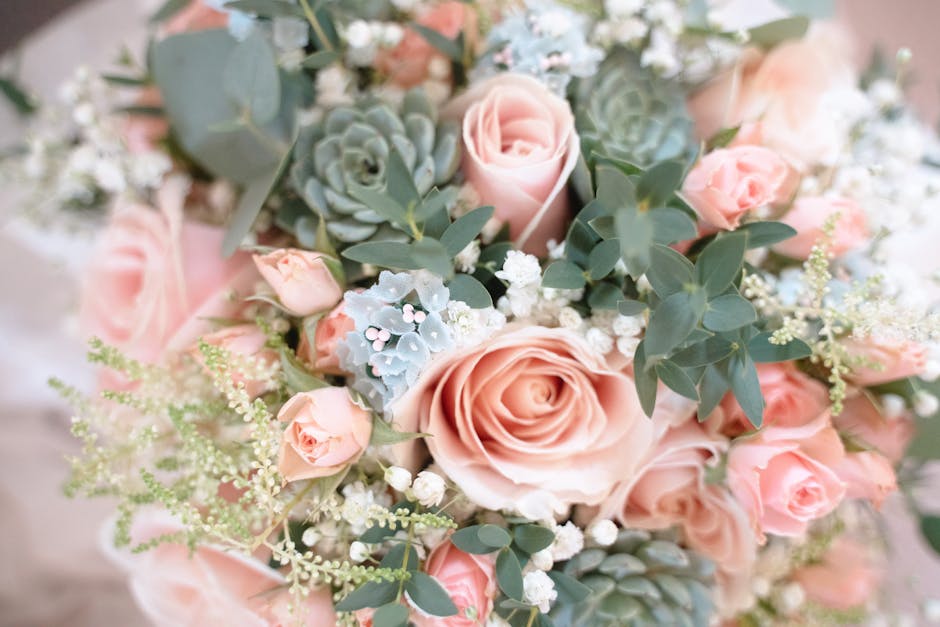
Instead of choosing a very large, all-white arrangement, they go for a hand-tied bridal bouquet with white roses, blush accents, and small soft-textured blooms for movement. Bridesmaid bouquets are scaled down versions with slightly more blush so they stand apart but still belong to the same family. Buttonholes are kept simple and neat, and table flowers repeat the same palette in a lighter way.
The result is balanced. The bouquet reads clearly in photos, the bridesmaids do not look overpowered, and the venue does not feel crowded. More importantly, the couple does not have to think about the flowers once the day starts. That is the dream, really. You want to notice them at the right moments and then forget about the logistics entirely.
A practical detail that helped in this kind of setup: the florist and couple agreed in advance how the bouquet would be presented just before the ceremony. No awkward last-minute search, no guessing which box belonged where. Small thing, but on a wedding morning, small things are everything.
Practical checklist
Use this checklist before you finalise your bouquet order.
- Have you looked at the venue space and lighting?
- Do the bouquet colours suit the dress and bridesmaids?
- Have you chosen a shape that suits the person carrying it?
- Are the flowers appropriate for the season?
- Have you decided on the supporting flowers too?
- Is the bouquet easy to carry for the whole day?
- Have you confirmed the delivery time and venue contact?
- Do you understand what happens if a flower is unavailable?
- Have you checked any venue rules about placement, candles, or access?
- Have you reviewed payment, order, and refund terms?
If you can tick most of those off, you are already ahead of the game. Honestly, that alone removes a lot of the usual wedding-day wobble.
For couples wanting a coordinated floral order, it may also help to look at wedding table arrangements and wedding corsages so the full floral plan feels joined up rather than pieced together at the last minute.
Conclusion
Choosing wedding bouquets for Eastham Village couples and venues is really about balance: beauty and practicality, style and comfort, personal meaning and venue fit. The most successful bouquets are the ones that make sense in the room, suit the couple's look, and hold up through the pace of the day. That is the quiet advantage of planning well. You get to enjoy the flowers instead of managing them.
Start with the venue, keep the season in mind, and do not be afraid to keep the design focused. One beautiful bouquet can say more than a crowded one ever could. And when it all comes together, the flowers should feel like they were always meant to be there. That is the lovely bit.
If you are ready to take the next step, explore styles, compare matching pieces, and speak with a florist who understands how to make the whole arrangement work on the day.
Get a free quote today and see how much you can save.
Frequently Asked Questions
What should Eastham Village couples think about first when choosing a wedding bouquet?
Start with the venue, then the dress, then the season. That order usually gives you a bouquet that looks natural in the space and works well in photos.
How early should we order wedding bouquets?
As early as you can once the wedding style and date are clear. That gives you more choice, better planning time, and less stress if seasonal flowers need adjusting.
What bouquet style suits a small village venue best?
Hand-tied bouquets and compact posies often work very well in smaller venues because they feel elegant without overpowering the room.
Can wedding bouquets be matched to bridesmaid bouquets and buttonholes?
Yes, and they usually should be. A shared colour palette across the bridal bouquet, bridesmaids, and buttonholes creates a much more cohesive look.
Are seasonal flowers better for wedding bouquets?
Usually, yes. Seasonal flowers often look fresher, feel more natural, and can be easier to source in a way that suits the overall plan.
What if my favourite flower is not available?
A good florist will usually suggest a close alternative that keeps the same style, tone, and feeling. It helps to agree in advance whether you want the bouquet to feel softer, brighter, or fuller if substitutions are needed.
How do I choose bouquet colours for my venue?
Look at the room's lighting, wall colours, and overall mood. Soft neutrals suit blush, white, and green well, while richer interiors can handle deeper reds, purples, or mixed colours more confidently.
What size bouquet is best?
The best size depends on the bride's height, the dress shape, and the venue scale. A bouquet should feel balanced in the hand and not hide the dress completely.
Do wedding bouquets need special care on the day?
They do. Keep them in water or in a cool place until handover if possible, and avoid leaving them in direct sun or a hot car for too long.
Can we keep the bouquet simple and still have it look elegant?
Absolutely. In fact, some of the most elegant wedding bouquets are simple, well-shaped, and made with a clear colour palette. Less can be more.
How do I make sure the flowers suit both the ceremony and reception?
Choose a bouquet style that feels flexible and ask for supporting arrangements that repeat the same colours or textures in a lighter or fuller version for the reception.
What is the biggest mistake couples make with wedding bouquets?
Choosing a bouquet in isolation. The bouquet should work with the venue, dress, season, and other flowers. When those pieces align, the result feels much more polished.